
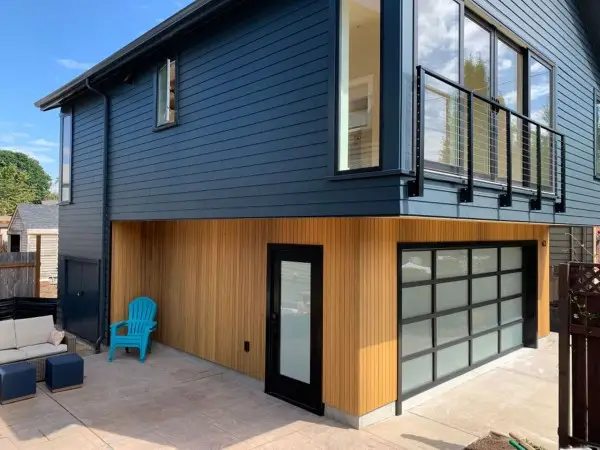
Boise is growing fast. The Treasure Valley has been one of America’s top migration destinations for years, and that growth hasn’t slowed — it’s just shifted into the neighborhoods. The result? A housing crunch that’s making a lot of homeowners look at their backyards, garages, and basements in a whole new way.
Accessory Dwelling Units — ADUs — have gone from a niche concept to a mainstream solution almost overnight. Between 2019 and 2023, Boise averaged just 61 ADU permits per year. In 2024, that number more than doubled to 130, followed by 82 in 2025 that were either constructed or approved. [Source: City of Boise] Homeowners across the North End, East End, Bench, and beyond are discovering what many cities figured out years ago: the best way to add housing isn’t always to build somewhere new — it’s to build smarter on land that already exists.
This guide is written for first-timers: homeowners who are curious about ADUs but don’t yet know where to start. By the time you finish reading, you’ll understand what an ADU actually is, whether your Boise property qualifies, what the city requires, how much it costs, how to pay for it, and — critically — how to find a builder you can trust.
Chapter 1: What Is an ADU? The Basics Explained
The Simple Definition
An Accessory Dwelling Unit (ADU) is a secondary, self-contained residential unit located on the same property as a primary home. To count as a true ADU — not just a bonus room or guesthouse — it must include its own kitchen, bathroom, and sleeping area. It has to be a complete, independent place to live.
You might hear ADUs called by different names depending on who you’re talking to:
- Backyard cottage or backyard home
- Granny flat or in-law suite
- Carriage house or garage apartment
- Basement apartment or lower-level unit
Whatever you call it, the concept is the same: a second, livable home on your existing residential lot.
The 4 Main Types of ADUs in Boise
| ADU Type | Description |
| Detached ADU | A freestanding structure separate from your home — the classic “backyard cottage.” Maximum privacy and design flexibility. Most popular in Boise for rental income scenarios. |
| Attached ADU | Built as an addition or extension of your existing home, sharing at least one wall. Common as side additions or rear extensions. |
| Garage Conversion | Converting an existing attached or detached garage into a livable space. Often the most cost-effective path since the structure already exists. |
| Interior/Basement ADU | Converting existing interior space — a basement, above-garage area, or large bonus room — into a separate unit with its own entrance. Boise recently approved laxed regulations for this type of ADU and classifies it as a ‘Junior ADU’. |
Each type has trade-offs in cost, timeline, privacy, and what your lot allows. A good builder will help you figure out which type makes the most sense for your specific property.
Chapter 2: Does Your Property Qualify? Boise Zoning Explained
Before you spend a dollar on design or planning, you need to answer one question: is an ADU even legal on your property? The answer depends on your zoning district, lot size, and a few other key factors.
Zoning Districts That Allow ADUs in Boise
ADUs are governed by a few sections of the City of Boise Code: 11-03-02 “Table of Allowed Uses”, which establishes where accessory dwelling units can be built, section 11-03-03.2B establishes ADU specific standards (how large they can be etc), and the 11-04.2 Residential District Dimensional Standards which specifies zone specific setbacks, heights and other dimensional criteria. ADUs are permitted in the following residential zoning districts:
| Zone | What It Means |
| R-1A/R-1B | Large-lot single-family zones. Minimum lot size 9,000 sq ft. ADUs allowed on qualifying lots. |
| R-1C | Boise’s most common zone — covers 25% of city land. Smaller single-family lots in established neighborhoods like the Bench, North End, and East End. |
| R-2 | Higher-density mix of detached, attached, and multi-family housing with limited commercial uses. Supports a broader range of housing types on smaller lots. |
| R-3 | Boise’s most urban residential zone. Higher-density housing near retail, employment, and transit corridors. |
| MX-1 | Small-scale neighborhood commercial, institutional, and residential mix. Walkable, pedestrian-oriented. Think corner stores, small offices, and housing side by side. Example: Bown Crossing area. |
| MX-2 | Larger-scale mix of office, commercial, institutional, and residential serving broader community needs. Example: Overland Rd. corridor near Walmart/Lowe’s. |
| MX-3 | Commercial and residential development organized along Boise’s major transit routes and pathways. Higher density, transit-oriented. Common along Vista Ave., State St., and Fairview Ave. |
| MX-U | Applies specifically to the Boise State University campus area. Flexible mix of residential, retail, and service uses supporting the near-university community. |
| A-1/A-2 | Low-density residential on large parcels alongside parks, agriculture, and open space uses. Covers foothills and fringe areas. ADUs permitted on qualifying lots. |
Not sure which zone your property is in? Visit SitePlanr.com and enter your Boise address to confirm your zoning designation and ADU eligibility.
Key Requirements at a Glance
- Size limit: ADUs must not exceed 900 sq ft or 70% of the primary dwelling, whichever is smaller.
- Maximum 2 bedrooms per ADU.
- Two ADUs allowed per property (2026 Update)
- An ADU can only be built on a lot with an existing primary residence — you cannot build an ADU before the main home
- Setbacks: Typically 5 feet from the sides and 15 feet from the rear. If the ADU is under 500 square feet and under 14 feet tall setbacks can be 3 feet from the side and 9 feet from the rear. If the ADU is above a parking structure being built at an alley side setbacks can be 5 feet and rear setbacks can be 0 feet, but 22 feet of backup space is required.
- No owner-occupancy requirement under the Modern Zoning Code — investors can now build ADUs on rental properties.
- No extra fire-safety design requirements for attached units with interior access — Boise is calling these Junior ADUs (2026 update).
- No minimum parking requirement under the new code
- Design must be compatible with the surrounding neighborhood
What About HOAs? The Truth Is More Complicated Than You’ve Heard
This is one of the most misunderstood topics in Boise ADU planning, and a lot of homeowners have been given incomplete or flat-out wrong information. Here’s the accurate picture as of 2026.
Idaho passed House Bill 166 in 2023, which is often cited as “HOAs can’t block ADUs.” That’s not quite right. HB 166 only protected internal ADUs — units inside your primary home or its garage — and only prevented HOAs from creating new restrictions after July 1, 2023. It explicitly preserved any CC&Rs that existed before that date. [Source: Idaho HB 166, 2023]
Senate Bill 1354, currently moving through the 2026 Idaho legislative session with an effective date of July 1, 2026, goes further — expanding protections to all ADU types (attached and detached as well as internal). However, it contains the same critical limitation: it cannot override CC&Rs that already existed when you purchased your home. If your HOA had rules restricting secondary structures or ADUs before you bought in, those rules remain fully enforceable against you. [Source: Idaho SB 1354, 2026]
⚠️ The bottom line on HOAs: Neither the 2023 nor the 2026 Idaho ADU legislation wipes out existing HOA restrictions. If your CC&Rs prohibited or restricted ADUs when you bought your home, that language still applies to you. Check your HOA documents — specifically anything referencing “accessory structures,” “secondary dwellings,” or “additional units” — before spending a dollar on planning or design.
Chapter 3: The Boise ADU Permitting Process, Step by Step
Permits aren’t the fun part. But they’re absolutely non-negotiable. Building an ADU without proper permits in Boise can result in stop-work orders, fines, forced removal, and serious problems when you try to sell your home. Here’s exactly what the process looks like:
Stage 1: Pre-Application — Start a PLN Record
Before submitting an ADU permit application, the City of Boise requires starting a PLN record through Planning & Development Services. This is a free pre-application consultation that gets a city planner assigned to your project for early feedback. [Source: City of Boise Planning Process Overview]
At this stage, submit a simple conceptual site plan with as much detail as you can reasonably show — lot dimensions, approximate structure placement, distances to property lines, access, and parking — along with a written project description. At this point, a simple hand sketch with the lot dimensions from Google Earth or Ada County Assessor is enough for a planner to do a meaningful Concept Review and come back to you with real feedback before you’ve committed to a design.
💡 Mode Homes’ Pre-Application Tip We create detailed conceptual site plans for every ADU project before touching construction drawings — and we submit the PLN record as one of our first moves on a new project. Questions about the PLN process? Contact Boise Planning & Development Services at zoninginfo@cityofboise.org or (208) 608-7100.
Stage 2: Design & Plan Preparation
You have 3 main options here:
Use Boise’s Free Pre-Approved ADU Plans
The City of Boise now offers a free catalog of 8 pre-approved ADU designs created by Boise-based firm Parke Architecture. The plans range from 280 to 695 square feet, and include both single-story and above-garage styles. Each design is named after a local bird species from the city’s Field Guide to Boise Birds. Using a pre-approved plan can reduce design and permitting time to a matter of weeks.
Use a Mode Homes Floor Plan
You can view our floor plan library here. Our floor plans are free when you hire us as your builder and the City of Boise has already reviewed and approved many of them allowing faster permitting. You can also customize our floor plans to your lot or liking, a service we offer at an hourly design cost.
Hire an Architect or Drafter for a Custom Design
If you want a custom layout, unique finishes, or a design tailored to a specific site challenge, you’ll work with an architect or design-build firm. Custom ADU design in Boise typically costs $4,000–$8,000 and adds several weeks to the overall timeline. This is often worth it for properties with unusual lot shapes, challenging setbacks, or when the ADU needs to closely match an existing home’s architectural style.
Stage 3: Permit Submission and Plan Review
Once your plans are finalized, they’re submitted to Boise’s Planning and Development Services for review. For new ADU construction, plan review covers zoning compliance, structural design, and all building systems — more involved than a typical remodel permit. Boise run 6–10 weeks for custom designs, and significantly faster when using a pre-approved city plan.
Chapter 4: How Much Does It Cost to Build an ADU in Boise?
Let’s talk numbers. Cost is the most common question — and the one with the most variation. Here’s a realistic breakdown of what Boise homeowners are paying in 2026.
Total Cost Ranges
| ADU Type | Typical Boise Cost Range (2026) |
| Garage / Interior Conversion | $60,000 – $130,000 |
| Attached ADU Addition | $120,000 – $200,000 |
| Detached ADU (new construction) | $150,000 – $270,000 |
| Detached ADU (custom/higher-end) | $220,000 – $350,000+ |
Mode Homes typically sees build costs for detached ADUs in the Boise area ranging from $275/SF to $325/SF for a well-finished ADU unit. Mode Homes Costs shift significantly based on the factors below.
What Drive the Cost
1. Site Preparation
Every lot is different. Does yours require grading, demolition of existing structures, tree removal, or soil work? Are utilities easily accessible or do they need to be extended across the property? Site conditions are one of the biggest sources of cost surprises — and one of the best reasons to get a proper site assessment before you commit to a budget.
2. Square Footage & Layout Complexity
More square footage and more complex layouts cost more. A simple rectangular footprint on a flat lot builds more efficiently than an irregular shape on a sloped site. A more custom design with vaulted ceilings, cantilevered decks or living space, or steel framing might add aesthetics and functionality, they also add cost.
3. Finish Level
Standard finishes keep costs down. Higher-end finishes — tile showers & floors, hardwood floors, custom cabinetry, metal railing — can add significant cost. If the ADU is intended as a rental, match your finish level to your rental market, not your personal preferences.
4. Utility Connections
Detached ADUs require a new electrical sub-panel and separate connections for water and sewer. There may or may not be sufficient sizing available to tap into the power, water or sewer from the existing house — if sizing is not sufficient, it could cost upwards of $10,000 to upsize the utility service to acomodate the new ADU so it’s important to do the research and identify this early.
5. Custom Design
Hiring an architect, drafter, interior designer or structural engineer in Boise can cost $150 an hour or more, easily reaching over $5,000 for a custom ADU project. If the design leads to extensive engineering or special products to make it work, it can lead to significant extra costs.
💡 Budget Rule of Thumb
For a new detached ADU in Boise, $200,000–$250,000 is a reasonable planning figure for a quality, finished unit. Add a 10–15% contingency for unexpected site conditions. Never commit to a budget based on a verbal estimate — require a written, itemized bid after a site visit.
Chapter 5: Financing Your Boise ADU
Most homeowners don’t pay cash for an ADU. The good news: Boise’s strong home values mean many property owners have significant equity available.
Common Financing Options
1. Home Equity Line of Credit (HELOC)
The most common tool. A HELOC lets you borrow against your home’s equity, typically up to 80–85% of your home’s value minus your outstanding mortgage balance on a term of 10-15 years. Variable rate, and you only pay interest on what you draw. Talk to your lender about your current equity position or visit our Financing page to connect with a Mode Home’s preferred lender. For investors, a HELOC is still available but may have more strict rules than owner occupied properties, such as a lower LTV (loan to value).
2. Home Equity Loan (HELOAN)
A home equity loan lets you borrow a lump sum against your home’s existing equity at a fixed interest rate — keeping your first mortgage completely intact. For Boise homeowners with solid equity, this can be one of the most straightforward paths to ADU financing. One of our preferred local lending partners, First Federal Bank, offers a home equity loan program that allows qualified borrowers to borrow up to 95% of their home’s appraised value on a 20 or 30 year term. That combination — a high loan-to-value ceiling, a long repayment term, and a fixed rate — can translate to very manageable monthly payments while preserving the rate and terms on your existing mortgage. If you’d like an introduction to First Federal, reach out to us directly and we’ll connect you.
One financing approach worth knowing about — not yet available locally but worth asking lenders about — is ADU-specific construction lending. In states like Washington and California, where ADUs are more established, some local banks and credit unions will factor in the completed ADU’s projected value when determining your maximum loan amount, using your building plans as part of their assessment rather than relying solely on your home’s current value. Mode Homes hasn’t identified a Boise-area lender offering this yet, but it’s something we’re actively working to establish through our local lending relationships.
3. Cash-Out Refinance
Refinance your existing mortgage for a higher amount and take the difference as cash to pay for your ADU project — some lenders have a product specific for ADU construction that will release the “cash” difference as construction draws. Fixed rate, but you’re replacing your existing mortgage — run the numbers carefully relative to your current rate before committing.
4. Construction Loan
A construction loan is worth understanding if you’re building a new detached ADU, but it’s important to know upfront that this product will replace your current first mortgage with a new mortgage on the property as a whole, with the completed ADU included in the valuation. There are two common structures: a one-step (or single-close) loan, which combines the construction financing and permanent mortgage into a single closing, and a two-step program, where the construction loan and the permanent mortgage are separate closings. The one-step program offers the convenience of locking your permanent rate upfront and avoiding a second round of closing costs; the two-step gives you more flexibility to shop for the best permanent rate once construction is complete. During the build, you’ll only make interest payments on the balance that has actually been drawn down to pay for construction — so if your total loan is $400,000 but only $150,000 has been drawn to date, you’re only paying interest on $150,000, keeping carrying costs manageable throughout the build period.
5. Personal Loan or Savings
For some homeowners, the most straightforward path is funding the ADU directly — through savings, a personal loan, or by borrowing against other existing assets. If you have a whole life or universal life insurance policy with accumulated cash value, or a taxable investment portfolio, borrowing against those assets rather than liquidating them can be a tax-efficient way to access capital without touching your home equity or taking on a new mortgage. The mechanics and risks of each vary, so these are conversations worth having with your financial advisor. The broader point: if an ADU in Boise can realistically generate a 8–12% annual return before appreciation, it may make more financial sense to put existing assets to work rather than leaving them where they are.
The Investment Case
📊 Boise ADU Investment Snapshot (2026)
- Typical Boise ADU rent: $1,400 – $2,100/month
- Annual rental income: $16,800 – $25,200
- Typical build cost (detached): $150,000 – $270,000
- Estimated Annual ROI: 10-12% Before Appreciation
- Property Value Impact: ADUs often add value of $100k or more
Chapter 6: The 2026 Regulatory Landscape for Boise ADUs — What’s Changing and What It Means for You
2026 is a significant year for ADU policy in Boise. Changes are happening at both the state and city level simultaneously — and understanding which rules are fully in effect, which are newly approved, and which are still pending matters before you commit to a project.
City of Boise: 2026 Zoning Code Updates
The Boise City Council finalized a suite of zoning code amendments in early 2026, building on the city’s landmark 2023 Modern Zoning Code rewrite. These updates have been fully approved and are expected to be published to the official code library in late April or May 2026. The three changes most relevant to ADU projects are below. [Source: City of Boise Zoning Code ZOA25-000013, Adoption Draft, December 2025; Idaho Statesman, March 12, 2026]
1. A Second ADU Is Now Permitted
The previous one-ADU-per-lot limit has been removed. Under the updated code, a lot or parcel may contain up to two accessory residential units in any combination of ADUs or Tiny Homes on Wheels. In practical terms, this means a homeowner could build a detached backyard ADU and convert an existing garage into a second unit on the same property — or pair any two permitted ADU types that fit within the lot’s dimensional standards. Each unit must still independently meet all size, setback, height, and design requirements of the underlying zoning district.
2. Junior ADUs — Adding a Second Kitchen Without Triggering Duplex Requirements
The update also streamlines the path for “junior” ADUs — self-contained living spaces created within the existing primary home. The key change: homeowners can now add a second kitchen to create a junior ADU without that conversion reclassifying the home as a duplex. Under the previous code, a second kitchen triggered full duplex building requirements — a cost burden that made interior conversions impractical for most homeowners. Removing that barrier makes it significantly easier and less expensive to add a rentable or livable unit within an existing home’s footprint. “I think it treats homeowners as partners in this housing shortage,” Boise City Council President Meredith Stead said. [Source: Idaho Statesman, March 12, 2026]
3. New Sidewalk Requirement for ADUs
The updated code adds a pedestrian connectivity standard specific to ADUs: a continuous sidewalk a minimum of 4 feet in width must extend from the front door of the ADU to the adjacent public or private street. On-site sidewalks may be located within required setbacks provided drainage is contained on site. This is worth building into your site plan from the start — routing a compliant sidewalk around an already-designed layout can be constraining on tighter lots, and retrofitting it adds cost. [Source: City of Boise Zoning Code ZOA25-000013, Adoption Draft, December 2025]
⚠️ Timing note on these city updates These changes are fully approved but not yet published to the official Boise City Code. Publication is expected late April or May 2026. Confirm current status before relying on any of these provisions: zoninginfo@cityofboise.org or (208) 608-7100.
State of Idaho: Where the Legislature Stands in 2026
House Bill 166 (2023) — What It Actually Did
- Protected internal ADUs only — units inside an owner-occupied homestead or its attached or detached garage
- Prevented HOAs from creating new CC&Rs prohibiting internal ADUs after July 1, 2023
- Explicitly preserved all existing CC&Rs that predate July 1, 2023
- HOAs retained the right to regulate internal ADUs with reasonable rules on design, size, setbacks, and parking
- Did not cover detached ADUs
[Source: Idaho HB 166, 2023]
Senate Bill 1354 (2026) — Pending, Not Yet Law
SB 1354 passed the Idaho Senate in the 2026 legislative session and, as of this writing, is pending House approval before it can be signed into law. If passed and signed, it would take effect July 1, 2026. Key provisions if enacted:
- Expands ADU protections to all types — internal, attached, and detached
- Prevents HOAs from enforcing CC&Rs that limit or prohibit ADUs — unless that restriction existed when the current owner purchased the property
- Requires all Idaho cities with populations over 10,000 to update their land use codes by February 1, 2027 to: allow ADUs by right in all single-family zones; prohibit parking minimums for ADUs in most circumstances; prohibit impact fees exceeding those charged for single-family dwellings; allow ADUs up to 1,000 sq ft or 75% of the primary dwelling; and ban owner-occupancy requirements
- ADU projects meeting local land use requirements must be approved administratively and as a matter of right — no discretionary approval required
[Source: Idaho SB 1354, 2026]
⚠️ What neither law does — the HOA reality
Neither HB 166 nor SB 1354 (if passed) wipes out pre-existing HOA restrictions. If your CC&Rs prohibited or restricted ADUs when you purchased your home, those rules remain enforceable against you. Check your HOA documents before committing to any project.
Chapter 7: Using Your ADU
Long-Term Rental
The most common use for a Boise ADU — and often the most financially straightforward. A 12-month lease provides stable, predictable income with minimal management overhead compared to short-term rentals. What makes ADUs particularly competitive in Boise’s rental market is the product itself: a detached, private living space is highly valued by renters in a way that attached units simply can’t replicate. In established neighborhoods like the Bench, East Boise, and the West End, the existing single-family rental stock tends to be older with deferred maintenance, and a renter’s alternative for something newer and nicer is typically a dense apartment complex or townhouse. A well-built ADU offers something the market doesn’t have much of — a newer, quality unit with its own entrance, its own yard space, and no shared walls, in a neighborhood renters actually want to live in. That’s a meaningful competitive advantage that tends to support both stronger rents and lower vacancy.
Short-Term or Mid-Term Rental
Platforms like Airbnb and Furnished Finder have made this popular in Boise. Short-term rentals require a City of Boise business license and must comply with applicable city regulations. Short and mid-term supply in Boise has grown significantly — be conservative in your income projections and research the short-term rental landscape in your specific neighborhood before building your financial case around it — our preferred resource for predicting AirBNB revenue is RevNest.com. For the right product, you may see 10-20% more revenue as a short-term or mid-term rental.
Multigenerational Living
ADUs are one of the most practical solutions available for multigenerational households — and the financial case for building one is stronger than most families realize until they start pricing the alternatives. Senior living apartments in the Boise area start around $2,500–$3,500 per month for independent living, with assisted living facilities often running $4,500–$6,500 per month or more. An ADU allows aging parents to live independently on the same property as family — with privacy, dignity, and proximity — at a fraction of that ongoing cost. On the other end of the generational spectrum, Boise’s housing market has made it genuinely difficult for adult children to get their footing. First-time buyers face a high price-to-income barrier in a market where median home prices have climbed significantly, and market rents for quality standalone units are competitive enough to make saving for a down payment feel like running on a treadmill. An ADU gives a family a way to provide a real, private home for an adult child — not a basement bedroom, but a self-contained space with their own entrance and kitchen — at below-market or no cost, while they build savings and work toward homeownership. In both directions, the ADU doesn’t just solve a housing problem. It keeps families close while preserving the independence that makes those arrangements actually work long term.
Home Office or Guest Space
Not every ADU needs a tenant. For self-employed professionals, creatives, and remote workers, a dedicated workspace separate from the home is genuinely valuable — and the cost of renting one elsewhere makes building your own increasingly compelling. Individual office spaces in and around downtown Boise typically run $800–$1,200 per month after utilities, and that’s money going entirely to someone else’s equity. A purpose-built ADU gives you a private, professional space steps from your front door — no commute, no shared conference rooms, no lease you don’t control — while every dollar you put into it builds value in your own property. And it doesn’t have to be an office. For homeowners who have simply outgrown their space — a growing family, a need for a guest suite, a hobby or studio room — an ADU is often the most financially sound way to add it. Moving in Boise means transaction costs, a new mortgage at current rates, and the disruption of leaving a neighborhood you’ve already put down roots in. Building an ADU lets you stay where you are, add the space you need, and invest in the property you already own rather than handing that equity to someone else.
Chapter 8: Common Mistakes to Avoid
| Mistake | How to Avoid It |
| Assuming you can’t afford it | Don’t rule out an ADU before exploring your financing options. Between HELOCs, home equity loans, construction loans, and borrowing against other assets, there are more accessible paths than most homeowners expect. Talk to a lender and talk to Mode Homes before you decide the numbers don’t work. |
| Making a large deposit before site costs are determined | Site development costs — grading, utility connections, foundation conditions — are specific to your lot and can vary significantly. A reputable builder will complete a thorough site assessment and provide a fully itemized bid before asking for any substantial deposit. Paying a large upfront deposit before those numbers are known leaves you exposed if costs come in higher than expected or if the project scope needs to change. Never commit significant money until you have a written bid that accounts for your actual site conditions. |
| Skipping concept approval and going straight into design | Skipping concept approval and going straight into design | Getting concept approval through the city’s PLN process confirms your desired build is possible and compliant with Boise’s zoning guidelines before you spend anything on design. Zoning rules have nuances and are changing quickly — fully developing your plans without this step first can mean costly redesigns if something doesn’t work. It’s a free step that can save thousands. Don’t skip it. |
| Not building while the financials make sense | Boise’s ADU market sits at an unusual intersection right now — strong rental demand, rising property values, a city actively reducing barriers to build, and incoming state legislation that will make approvals even more straightforward. The combination of rental income potential, equity growth, and relatively accessible financing options makes the case for building compelling in a way that may not last indefinitely as the market matures and supply increases. If you’ve been on the fence, the cost of waiting is worth thinking about carefully. |
| Choosing a builder without ADU-specific experience | There is nothing inherently unique or difficult about building an ADU — it’s a home, and any licensed contractor can build one. But expertise and experience in ADU projects specifically can pay off at every stage of the process. A builder who has worked through Boise’s PLN and planning approval process many times knows what the city is looking for, how to structure a concept submission, and how to avoid the design decisions that tend to cause delays or require revisions. They’ll also have a sharper instinct for site layout, unit design, and the small decisions during construction that affect how livable and rentable the finished product actually is. For a project of this size and complexity, working with someone who has done it before in Boise is worth prioritizing over the lowest bid. |
| Not thinking through access and privacy early | Where your ADU entrance faces, whether the tenant and owner share a driveway, and the sight lines between the two units are all decisions that are easy and cheap to adjust on paper — and disruptive and expensive to change once construction is underway. A poorly thought out layout can create awkward daily interactions between owner and tenant, reduce the appeal of the unit to prospective renters, or simply make the property feel smaller and less private for everyone. Think through how both households will actually live on the lot day to day before the design is finalized. |
| Not verifying utility capacity early | Older Boise neighborhoods — particularly parts of the Bench, East Boise, and the West End — can have power, sewer, and water infrastructure that requires upgrades before an ADU can connect. These aren’t costs that show up in a standard construction bid until someone actually investigates your specific hookup points. Finding out late in the process that a sewer lateral needs replacing or that your electrical service requires a panel upgrade can significantly change the project economics. Get a utility assessment done early — before you’ve committed to a design or a budget. |
Chapter 9: Your Next Steps
Building an ADU is a significant project and there’s no single right way to approach it. Below are two common paths — working with Mode Homes from the start, or working through the early steps on your own. Whichever direction you take, the goal is the same: get the right information early, avoid costly surprises, and make decisions in the right order.
Mode Homes Guided Path
- Schedule a free consultation with Mode Homes. We’ll visit your property, assess your site, walk through your goals, and give you an honest read on feasibility, costs, and timeline — before you’ve spent anything. Fill out our Contact Form to start the conversation.
- We verify your zoning and eligibility. We confirm your zone, lot dimensions, setbacks, and any overlay districts or utility considerations specific to your property.
- We present a proposal and project development agreement. Based on our site assessment, we’ll present a clear proposal outlining the project scope, approach, and what to expect. If you choose to engage Mode Homes for project development, we move forward together through the following steps.
- We prepare and submit your PLN record. Mode Homes creates a detailed conceptual site plan and project description and submits the PLN record on your behalf — getting city planner feedback before any design work begins.
- We coordinate your Building Division check-in. We identify any structural, electrical, plumbing, or mechanical requirements early so they’re accounted for in the design, not discovered after the fact.
- We guide your financing conversation. We’ll walk you through the financing options that fit your situation and connect you with lending partners who understand ADU projects.
- Design and planning approval. Once concept approval is in hand, we develop full construction drawings and manage the planning application through to approval.
- We build it. Permitted, inspected, and finished to a standard that holds up for tenants, family, or resale.
Self-Guided Path
- Verify your zoning. Visit SitePlanr.com or call Planning & Development Services at (208) 608-7100 to confirm your zone and that ADUs are permitted on your parcel. Try the City of Boise ADU One Page Guide for more information on eligibility.
- Review the city’s free pre-approved ADU plan catalog. Eight designs ranging from 280 to 695 sq ft, available free at by clicking here. Even if you go custom, reviewing these gives you a fast read on what the city has already approved and can significantly shorten your permitting timeline.
- Start at this link or email zoninginfo@cityofboise.org. Submit a conceptual site plan and written project description — not construction drawings. Allow 10–15 business days for planner response.
- Check in with the Building Division. Before finalizing any plans, confirm whether a design professional or engineer is required and identify any structural, MEP, or utility requirements specific to your project.
- Get your financing picture clear. Talk to your lender about HELOC, home equity loan, or construction loan options before committing to a builder. Know your ceiling before you start getting bids.
- Get multiple written, itemized bids. From builders with verified ADU experience in Boise. Require a site visit before any bid is issued — a number without a site assessment isn’t reliable.
- Questions along the way? Mode Homes is happy to talk through any stage of the process. Call 208-280-9213 or email kole@modehomesid.com.
Final Thoughts
Boise’s ADU market is maturing fast. The city has made meaningful moves to reduce barriers — free pre-approved plans, a streamlined PLN process, and a planning team that actively wants to help homeowners add housing. The state is following with legislation that has the potential to make ADU approvals even more straightforward by 2027. Rental demand across the Treasure Valley remains strong.
For homeowners who qualify and plan carefully, a well-built, properly permitted ADU in Boise is one of the most durable investments available in residential real estate today. The key is doing it right — verifying the rules, using the city’s process as it was designed, and working with a builder who has genuine local experience.
Ready to Build? Start with Mode Homes. We specialize in ADUs, infill development, and build-on-your-lot projects across the Treasure Valley. We know the Boise permitting process because we work through it every day. 📞 208-280-9213 | 📧 kole@modehomesid.com | 🌐 modehomesid.com Free consultation. No pressure. Just honest answers.