Idaho passed a new law that changes how cities can regulate accessory dwelling units — and it applies directly to Boise. Here’s what the law actually says, what it means for you, and what’s still catching up to it.
The Law: Idaho Code §67-6541
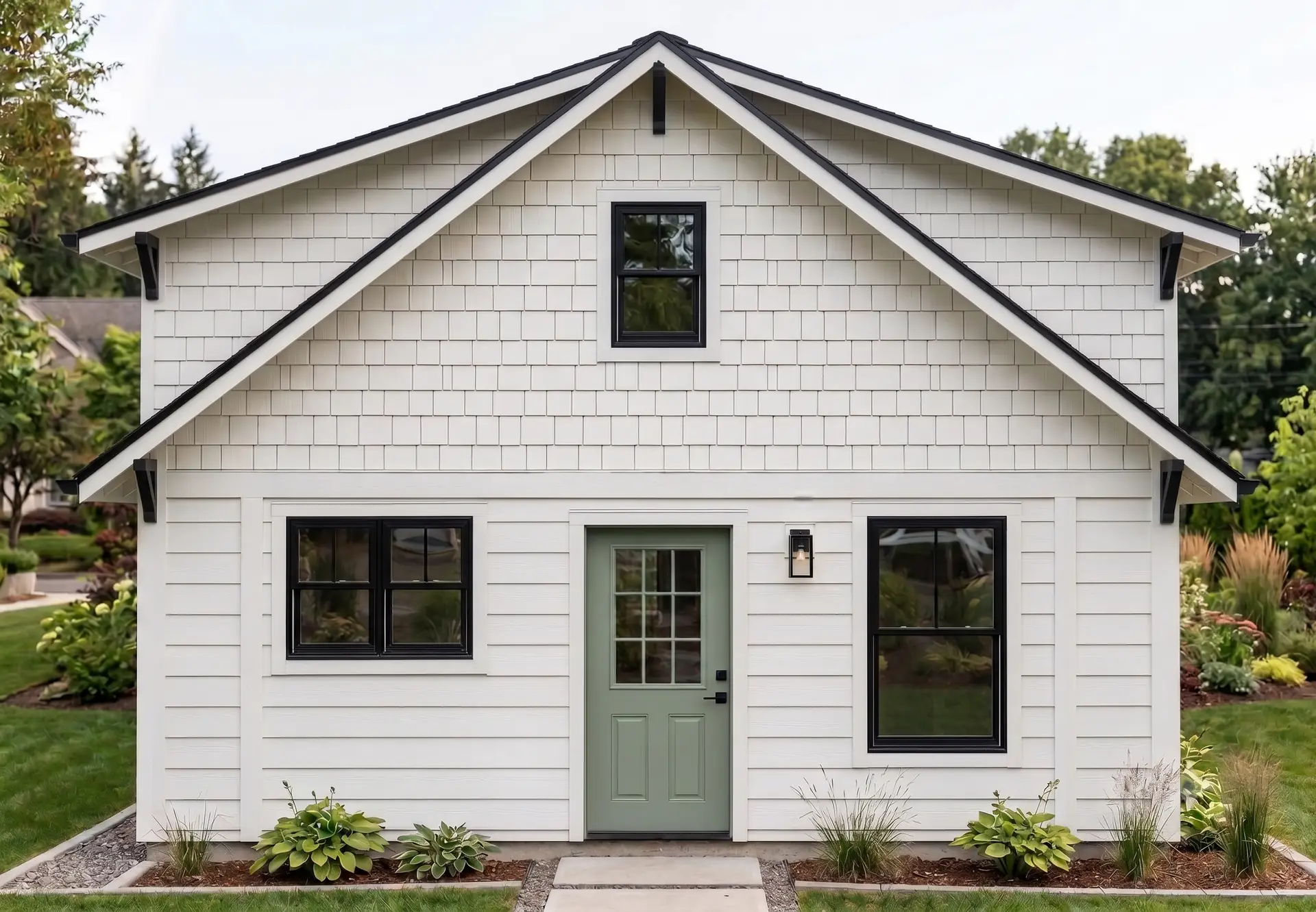
Idaho Code §67-6541, added in 2026, sets statewide rules for accessory dwelling units. The core rule is simple: no city in Idaho can ban ADUs in a residential zoning area. The law defines an ADU as a self-contained living unit — its own kitchen, bedroom, and bathroom — built on the same lot as a single-family home. It can be internal, attached, or detached. It does not cover motorhomes, campers, RVs, or tiny homes on wheels.
The February 1, 2027 Deadline
This is the part every Boise homeowner should understand: the law is already in effect, but cities have until February 1, 2027 to update their own local zoning codes to match it. Until a city formally amends its code, its existing local rules are still what govern day-to-day permitting — even where those rules are stricter than what state law now requires.
Bottom line: Idaho Code §67-6541 sets the floor. Boise’s local zoning code has until February 1, 2027 to comply. If you’re planning an ADU now, always confirm current requirements with the City of Boise directly — the state law and the local code may not fully align yet.
What Cities Must Allow, Once Compliant
By the deadline, every qualifying city — meaning any Idaho city with a population over 10,000, which includes Boise — must update its comprehensive plan and land use regulations to:
| Requirement | What it Means |
| Allow at least one ADU per lot | Either one internal ADU, or one detached ADU in the rear yard (subject to the same setbacks as the primary home) |
| No extra parking requirements | Cities can’t require off-street or guest parking for an ADU — unless the main home lacks off-street parking, the street isn’t built for on-street parking, or the property sits within 1/4 mile of transit, jobs, or commercial services |
| No excess impact or utility fees | ADU impact fees and utility connection fees can’t exceed what’s charged for other single-family homes |
| Minimum size protection | Cities can’t limit an ADU to less than 1,000 square feet or 75% of the primary home’s size |
| No owner-occupancy requirement | Neither the primary home nor the ADU can be required to be owner-occupied |
| No unfair height limits | ADU height can’t be capped below the height of the existing primary home |
| No extra-strict standalone rules | ADUs can’t face tougher setback, lot size, or coverage rules than single-family homes in the same zoning district |
Approvals Must Be Administrative — Not Discretionary
If an ADU project meets the zoning requirements, the law requires it to be approved administratively and as a matter of right — meaning no public hearing, no discretionary review, no case-by-case approval process standing in the way. Cities also can’t design approval standards or procedures that add unreasonable cost or delay, even if each individual rule looks minor on its own.
What the Law Doesn’t Override
§67-6541 doesn’t erase every other rule that applies to construction. It specifically leaves in place:
| Still Applies |
| Building codes, fire safety standards, and floodplain regulations |
| Water, sewer, storm drainage, road access, and utility service requirements |
| Environmental protections — aquifer recharge zones, steep slopes, critical habitat |
| Setback requirements tied to rights-of-way and easements |
A Few Exceptions to Know
Historic districts and designated historic properties are exempt from this law’s requirements. Cities are also always free to adopt less restrictive ADU rules than the law requires — the statute sets a floor, not a ceiling. And it only applies to cities with a population over 10,000, which covers Boise but is worth confirming for smaller surrounding cities.
What This Means If You’re Planning an ADU in Boise
The direction is clear — Idaho is making ADUs easier to build statewide. But the exact rules governing your project today still depend on where Boise’s local code stands relative to the February 1, 2027 deadline. If you haven’t already, start with our complete Boise ADU guide to understand the full process — Mode Homes tracks zoning changes closely and works from the current, applicable code, not assumptions about what the law will eventually require.
Planning an ADU in Boise? We’ll walk your specific lot through the current zoning requirements — state law and local code — so you know exactly what’s allowed before you build.
Is it legal to build an ADU in Boise right now?
Yes. Idaho Code §67-6541 prohibits cities from banning ADUs outright. What’s still catching up is whether Boise’s local code fully reflects every requirement of the new law — that update is required by February 1, 2027.
Can my city require parking for an ADU?
Only in specific situations — if the main home lacks off-street parking, the street can’t support on-street parking, or the property isn’t within 1/4 mile of transit, jobs, or commercial services. Otherwise, cities can’t require it.
Does this law apply everywhere in Idaho?
It applies to cities with a population over 10,000, and does not apply to historic districts or designated historic properties.